
Singapore: Hawker Centres
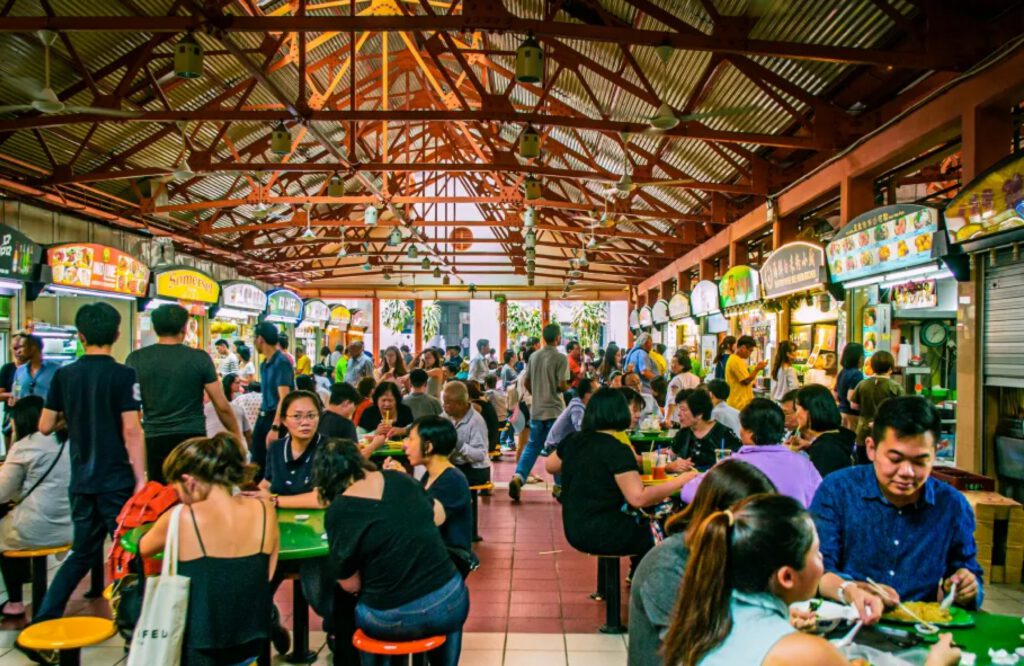
Bringing together well-loved local food under one roof, hawker centres are a unique aspect of Singaporean culture… they continue to be places where people from all walks of life can enjoy affordable food in a clean and hygienic environment.
National Environment Agency, Government of Singapore
Hawker Centres are government built and regulated food courts where multiple vendors serve affordable, local dishes. There are currently 119 hawker centres across the country.
What’s the story?
After gaining independence in 1965, Singapore began urban redevelopment – building up new neighbourhoods with new infrastructure: housing, transport, parks and, importantly hawker centres. There is a strong food culture that has built up around hawker centres. In 2020, hawker centres were officially inscribed on the UNESCO Cultural Heritage List.
How do they work?
The government agency in charge of the centres, National Environment Agency (NEA), currently manages 119 hawker centres across the country.
Hawker centres are underwritten by state support in 3 main ways: controlling the rents for all, subsidising the rent for some and controlling the price of some basic commodities (for example, rice). In combination, the centralisation of amenities – clean water, reliable electricity, tables and chairs for diners, proper ventilation, a cleaner reduces operation costs for the stallholders. During the COVID-19 pandemic, the government provided Goods and Services Tax (GST) subsidies or rebates to hawkers to ease the burden of taxes.
Each hawker centre has a hawker association comprising representatives of hawkers and citizens. The National Environment Agency maintains regular dialogue with the hawker associations to resolve problems pertaining to their centres, ensuring public partnership and ownership.